Manifest delivered exactly what the supply chain industry needs right now: vision, urgency, and real access to the people shaping what’s next.
And it all happened in the glitz and glam and synthetic lighting that only Las Vegas brings.
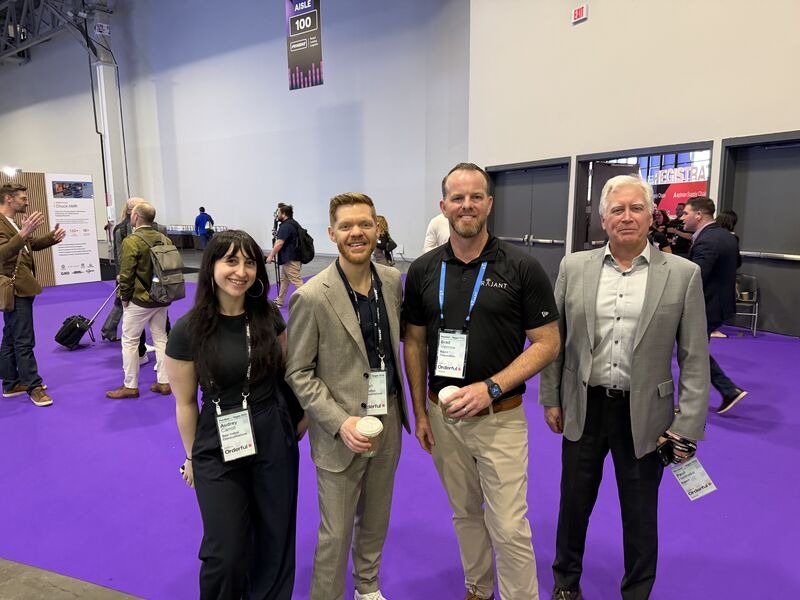
The show has a CES-like feel — high production value, big ideas, bold conversations — but it’s tailored specifically for supply chain and logistics leaders. What stood out most to me wasn’t just the programming. It was the density of decision-makers. C-suite executives were not tucked away behind velvet ropes. They were on the floor, in meetings, engaging in meaningful dialogue. The conversations we had were productive and forward-looking.
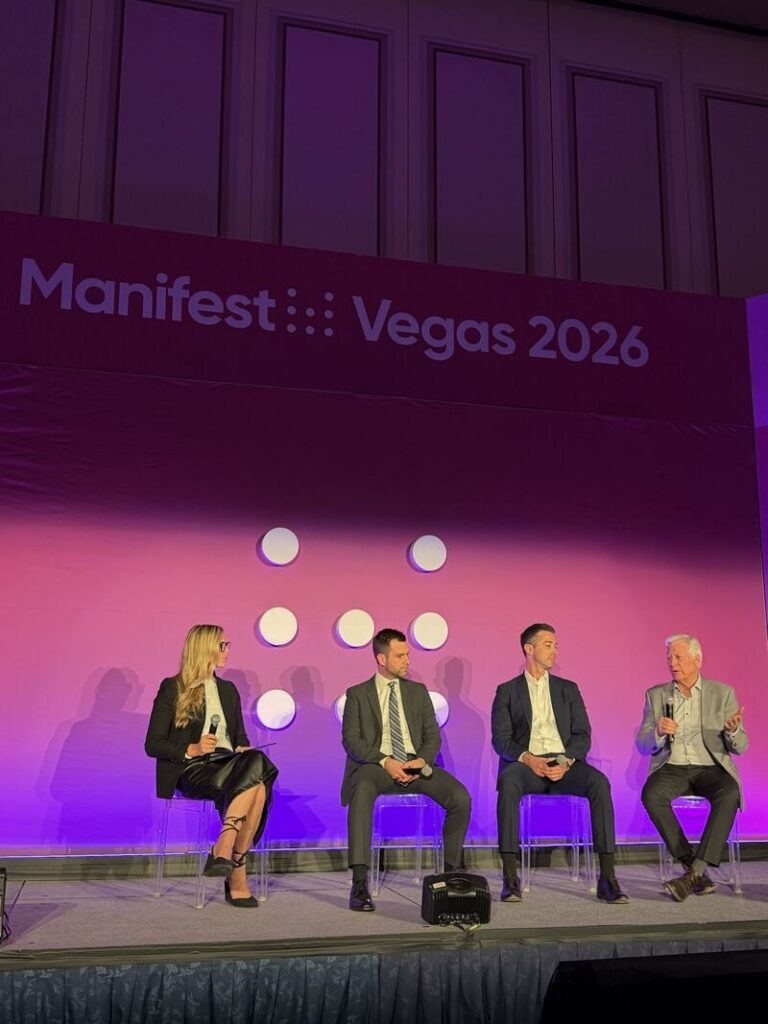
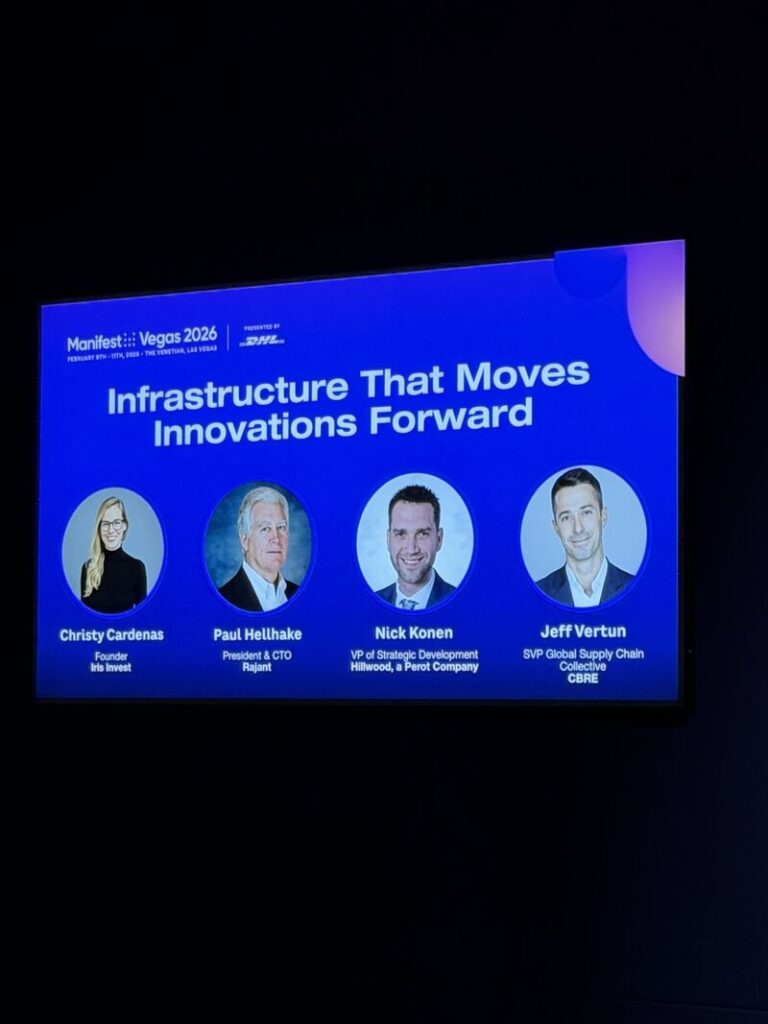
A major highlight was attending a panel on infrastructure innovation featuring our client, Paul Hellhake, CTO and President of Rajant Corporation. In roughly 30 minutes, the discussion spanned cybersecurity, the urgent need for infrastructure modernization, energy demands, and even nuclear fusion. It was ambitious — and grounded.
What stayed with me most was Paul’s point about network convergence in the era of automation.
“Convergence is going to be critical, particularly in an era of agent-to-agent and machine-to-machine communications. Robots need to be able to tell each other their capabilities and communicate directly for operations to run safely and smoothly.”
That’s more than a technical observation. It’s a strategic imperative to advance technologies.
As robotics, AI, and automation scale across warehouses, ports, and manufacturing floors, networks must evolve from passive connectors to intelligent, resilient infrastructure layers. Machine-to-machine communication requires reliability, low latency, and security by design. Without it, the promise of autonomous logistics falls apart.
Appreciated the insights from Nick Konen and Jeff Vertun, and strong moderation from Christy Cardenas.
There’s real momentum building in this space. Manifest made that clear. The future of supply chain will be powered by connectivity—and the leaders investing in the infrastructure to support it.